Waiting overnight for a standard portable three-pin trickle charger to top up your electric vehicle is incredibly frustrating. Plugs meant for everyday household appliances only deliver a slow charge, often taking over twenty-four hours to fully replenish a modern EV battery. If you rely purely on these slow cables or make frequent detours to public fast-charging stations around Sydney, owning an electric car quickly loses its convenience.
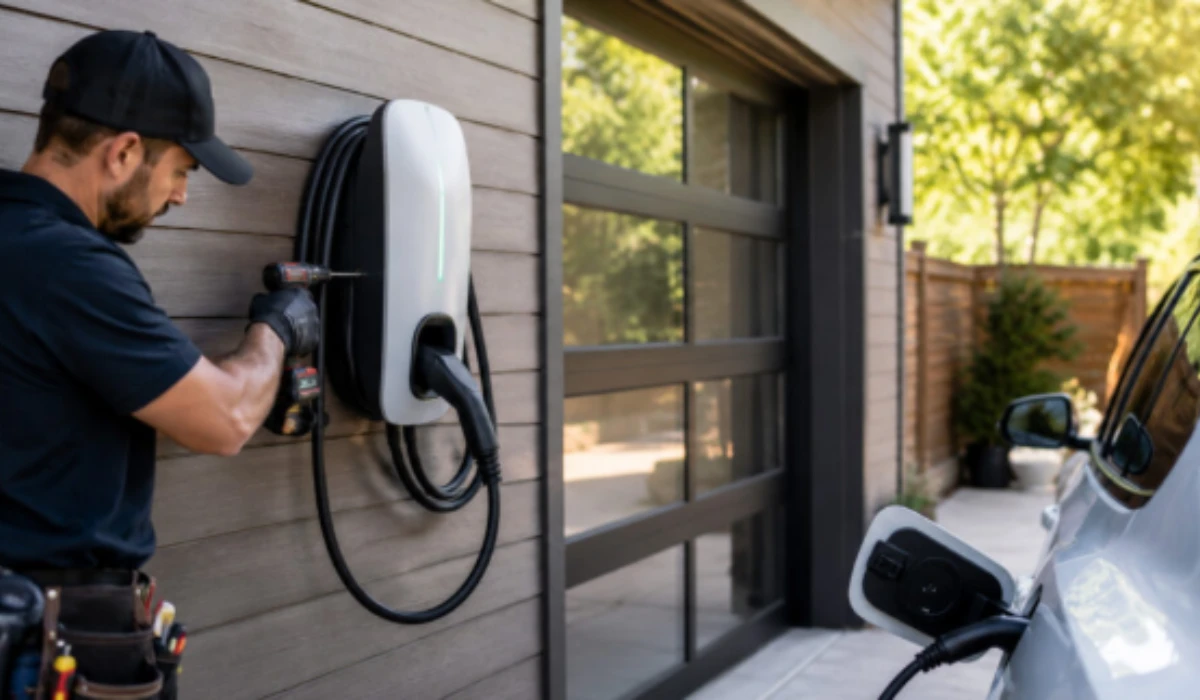
Mounting a wallbox at your property is the best way to get the most out of driving an Electric Vehicle. When you get an EV Charger Installation, you can plug it in when you get home and wake up every morning to a fully charged battery.
Selecting the Right Charger for Your Property
Setting up an efficient home charging station involves far more than just mounting a box to your garage wall. You need to choose a system that matches both your vehicle’s acceptance rate and your home’s electrical system:
Single-Phase (7kW) Chargers: Perfect for standard residential homes. A 7kW wallbox provides a substantial speed boost over a standard wall plug, completely charging a typical EV battery in roughly seven to nine hours.
Three-Phase (22kW) Chargers: Ideal for commercial properties or modern homes with a three-phase power supply. These units can slash your charging times down to under three hours, provided your vehicle’s onboard charger can accept the higher power rate.
Tethered vs. Untethered Units: Tethered chargers come with a permanently attached cable, offering ultimate grab-and-go convenience. Untethered units feature a clean socket design, allowing you to plug in different cable types for different vehicle brands.
Protecting Your Home Grid With Smart Energy Management
Adding a high-power appliance like an EV charger puts a massive structural load on your main electrical panel. If you plug your car in while running a ducted air conditioner, an induction cooktop, and a clothes dryer, you run a serious risk of overloading your main service fuse and blacking out your entire house.
To prevent this, certified installers implement smart dynamic load balancing. This technology constantly monitors your home’s real-time electricity consumption. If your household power usage spikes, the smart charger temporarily scales back its power delivery to protect your main panel. Once you turn off your heavy appliances, the charger automatically jumps back up to maximum speed, keeping your property completely safe.
A Strict, Code-Compliant Installation Sequence
Handling the high-voltage circuits required for rapid EV charging leaves absolutely zero room for amateur DIY attempts or cheap components. A licensed, certified technician from Monaco Electrical follows a meticulous process to ensure your installation complies fully with Australian Standards (AS/NZS 3000):
Main Switchboard Audit:
The technician checks your existing panel capacity to ensure it can handle the continuous load. If your home still uses old ceramic fuses, a switchboard upgrade is performed first.
Dedicated Circuit Installation:
The sparky runs heavy-duty, UV-stabilised conduit from your main panel to your charging location, installing a dedicated circuit breaker and a specialised Type B RCD safety switch.
Commissioning and Testing:
Once mounted, the charger undergoes strict earth loop and polarity testing using specialised diagnostic equipment to simulate a live vehicle connection before handover.
Smart Charging Tip:
If you have a solar panel setup on your roof, choosing a smart EV charger allows you to divert 100% of your excess solar generation directly into your car battery, meaning you can literally drive your vehicle on pure, free sunshine.
Upgrading to a professional home EV charger eliminates range anxiety for good, slashes your weekly running costs, and ensures your property is fully equipped for the future of transport.