For something a home relies on every single day through the colder half of the year, the boiler gets remarkably little thought — right up until the morning it refuses to fire and the house is cold. And boilers, with a sense of timing that can feel almost personal, tend to fail on the iciest day of the year, when every heating engineer in the county is already run off their feet. The reassuring truth is that the great majority of breakdowns are preventable. A little regular attention keeps a heating system safe, efficient and far less likely to leave you shivering and waiting for an emergency call-out.
Here is what that attention looks like, and how to catch the warning signs of trouble before they become a no-heat emergency.
The annual service: dull, cheap and genuinely worth it
The single most valuable thing you can do for a boiler is have it serviced once a year by a qualified engineer, ideally before the heating season rather than in the middle of it. A service is not an upsell; it is basic maintenance, and it earns its modest cost several times over. The engineer checks that the boiler is burning cleanly and safely, that there are no leaks of gas or of combustion products, that pressures and flue readings are within range, and that the components are sound. Crucially, a service catches small faults — a tired part, a slight leak, a sensor beginning to drift — while they are cheap to put right, rather than after they have failed and taken the heating down with them.
There are two other reasons not to skip it. The first is that most manufacturers require an annual service to keep the boiler’s warranty valid, so missing one can quietly void cover worth hundreds of pounds. The second is efficiency: a clean, well-tuned boiler burns less gas to produce the same heat, which shows up directly on the bill across a long winter.
If your boiler is more than a year past its last check-up, booking a service is the obvious place to start, and reputable local firms offer boiler servicing alongside repairs and gas-safety checks, so a single visit can put your whole system on a sound footing before the cold sets in.
Warning signs worth acting on early
Boilers and heating systems usually give some notice before they fail outright. Learn to notice the early signals and you can have a small problem fixed on your own timetable instead of in a crisis. Be alert to banging, gurgling or whistling noises — often called kettling — which can indicate trapped air or a build-up of sludge. Watch for the boiler pressure repeatedly dropping and needing topping up, which suggests a leak somewhere in the system. Note if radiators are taking much longer to warm up than they used to, or if some never get properly hot. And keep an eye on the flame: a healthy gas flame should burn crisp and blue, so a lazy yellow or orange flame, along with any sooty marks or unusual smells, warrants switching the boiler off and calling an engineer promptly.
None of these signs necessarily means disaster, but all of them are the system asking for attention. Addressing them early is almost always cheaper and less disruptive than waiting for the breakdown they are warning you about.
Look after the radiators, not just the boiler
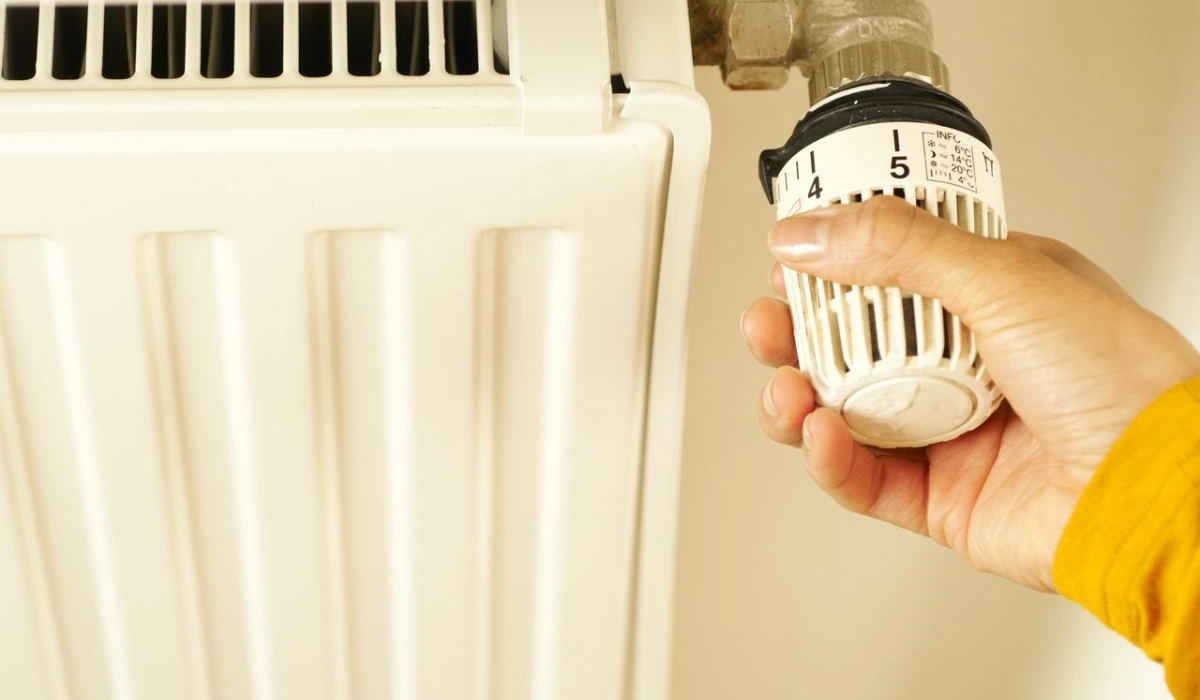
A heating system is more than its boiler, and the radiators repay a little care too. If a radiator is hot at the bottom but cold at the top, it usually has trapped air and needs bleeding — a simple job with a radiator key that often restores it in minutes. If, instead, it is cold at the bottom while warm at the top, the likely culprit is sludge: a build-up of rust and debris settling inside the system that blocks the flow and forces the boiler to work harder for less warmth. Persistent sludge across several radiators is what a power flush is designed to clear, circulating cleaning chemicals through the system to remove the gunk and restore even, efficient heating. If your radiators have cold patches, need frequent bleeding, or the system feels sluggish, it is worth having an engineer assess whether a flush would help.
Simple checks you can do yourself
A few habits keep things healthy between services. Check the boiler’s pressure gauge from time to time; most systems sit happily around one to one-and-a-half bar when cold, and a gauge that keeps falling points to a leak worth investigating. In winter, running the heating briefly even during milder spells keeps everything moving and stops parts seizing. And it is wise to know where your stopcock and the boiler’s controls are before you need them in a hurry. Beyond that, resist the temptation to tinker with anything involving gas or the boiler’s internals — that is firmly the territory of a professional.
Gas safety is not optional
This is the part that matters most. Any work on a gas appliance must, by law and for your safety, be carried out by a Gas Safe registered engineer — never a well-meaning amateur. A poorly maintained or badly fitted gas boiler can leak carbon monoxide, a colourless, odourless gas that is genuinely dangerous, and an annual service is your main defence against that risk. Every home with a gas appliance should also have a working carbon monoxide alarm fitted nearby and tested regularly. If an alarm sounds, or if you smell gas, you should turn off the supply, ventilate the property and call the emergency gas line without delay.
Repair or replace?
No boiler lasts forever, and there comes a point where pouring money into repairs stops making sense. As a rough guide, boilers tend to give reliable service for around ten to fifteen years; beyond that, efficiency drops and parts can become harder to source. If your boiler is elderly, breaking down repeatedly, expensive to fix, or noticeably struggling to heat the home, it may be more economical in the long run to replace it with a modern, efficient model that costs less to run. A trustworthy engineer will give you an honest assessment rather than simply selling you a new unit — and for a younger boiler, a straightforward repair is usually the sensible course.
Get ahead of the cold
The thread running through all of this is timing. Almost everything that keeps a heating system reliable — the annual service, bleeding the radiators, sorting out that dropping pressure, deciding whether to repair or replace — is far better done in the mild weeks of autumn than discovered on the first hard frost. Book the service early, deal with the small warning signs as they appear, keep a carbon monoxide alarm in date, and your boiler is far more likely to do what you need it to do all winter: quietly keep the house warm without drama. A heating system that has been looked after is one you can more or less forget about — which, on a cold January morning, is exactly how it should be.