
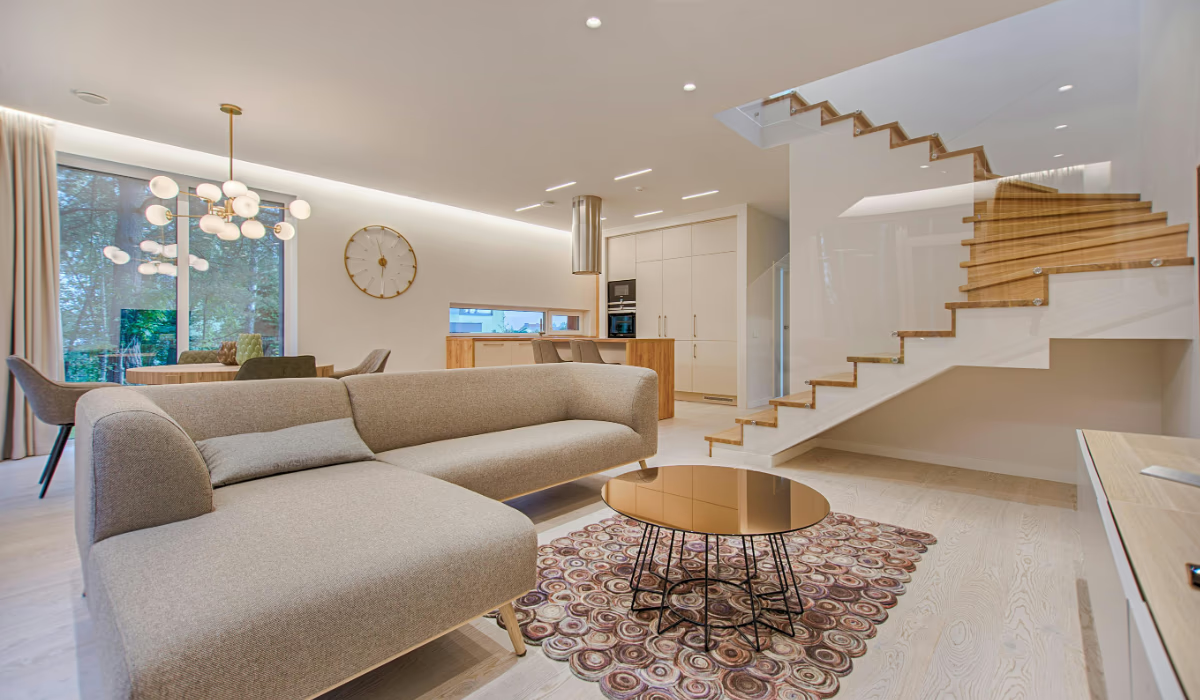
Modern Victorian interior design updates the ornate and intricate features of traditional Victorian decor with cleaner lines, lighter palettes, and thoughtful balance. It captures the romantic elegance of the Victorian era—such as decorative moldings, rich textures, and grand furnishings—but refreshes them so spaces feel current, inviting, and not overly formal or stuffy.
This style keeps key Victorian charm (love of details, patterns, craftsmanship) while adapting to modern tastes. Homes are designed to feel lived-in but stylish, mixing vintage pieces with contemporary touches so that spaces remain elegant but functional.
History and Evolution of Victorian Decor and Its Modern Revival
Victorian decor began during Queen Victoria’s reign in the 19th century, marked by opulence, heavy ornamentation, rich woods, patterned wallpapers, and handcrafted elements. Rooms were often dark, filled with decorative trim, and partitioned in formal layouts.
In recent decades, designers have reinterpreted Victorian style to make it more accessible. Light has become more central—lighter colors, open planning, fewer heavy draperies. Decorative features are preserved but edited. The result is a modern Victorian aesthetic that feels elegant without being overwhelming or outdated.
Key Characteristics of Modern Victorian Interiors
Ornate Craftsmanship and Decorative Details
Hand-crafted trims, decorative moldings, and carved wood are still hallmarks. Furniture and accessories often feature intricate patterning or design motifs, but scaled back so they serve as highlights rather than dominate every wall.
Rich, Luxurious Textures and Fabrics
Velvet, silk, brocade, lace, embroidery—all fabrics that convey richness and heritage. Cushion textures or drapery folds play a big part in adding depth, warmth, and a touch of glamour.
Balanced Color Palettes and Light
While traditional Victorian interiors favored deep tones, modern versions use softer palettes—creams, muted pastels, warm neutrals—with accents of jewel tones or bold colors in small doses. Light—natural or well-designed artificial—helps to open up the space and reduce heaviness.
Mixing Antique and Contemporary Pieces
A modern Victorian room might feature a vintage Victorian chaise or ornate mirror alongside streamlined contemporary furniture. This contrast keeps interiors from feeling stuck in the past.
How to Create Modern Victorian Decor Ideas in Your Home
Begin with architectural or structural details if possible—maintain or restore original baseboards, ceiling moldings, bay windows, or fireplaces. These “bones” set the tone.
Choose a statement piece (mirror, chandelier, ornate chair) to serve as focal point. Let surrounding pieces be simpler so that the statement stands out.
Use wallpaper or decorative wall treatments (panels, rich prints) in moderation—perhaps on one accent wall or in smaller areas like alcoves. Pair with simpler walls to avoid visual overload.
Layer textures thoughtfully: rugs, curtains, throw pillows. Use fabrics that add softness and richness without overdoing ornamentation.
Lighting is essential—mix overhead fixtures (perhaps traditional chandeliers), table lamps, wall sconces. Soft lighting will highlight the decorative details and create a warm, elegant ambience.
When Modern Victorian Decor is a Good Fit
It works best in living rooms, dining rooms, bedrooms, or entryways—spaces where you want warmth, character, and a hint of grandeur.
If your home has classical architecture or original features, modern Victorian style enhances these naturally. But even in newer or simpler homes, you can emulate the style using decor pieces, lighting, and fabric textures.
If your preference is ultra-minimal, sleek, or ultra-modern, this style might feel too ornate—but incorporating small Victorian elements can still add elegance without changing the whole aesthetic.
Conclusion
Modern Victorian interior design celebrates elegance, craftsmanship, and decorative detail while making these features work for today’s homes. By mixing antique charm with contemporary simplicity, using luxurious textures, and emphasizing light and balance, you can get an aesthetic that feels timeless and graceful.
FAQs
What defines modern Victorian interior design?
It’s a style that blends Victorian era ornamentation—like decorative trims, rich fabrics, and detailed furniture—with traits of modern design such as lighter colors, cleaner lines, and open spaces.
How can I make a Victorian room feel less formal and more modern?
Use lighter color palettes, limit heavy draperies, choose statement decorative pieces rather than filling every space, and balance ornate items with simpler, contemporary furnishings.
Which rooms are best suited for Victorian decor ideas?
Living rooms, bedrooms, dining areas, and entry halls are ideal. Accent walls, bay windows, or ceilings are also great opportunities to use Victorian features.
Can modern Victorian style work in small homes or apartments?
Yes. Emphasize select pieces instead of adding ornament everywhere, use mirrors to enhance light, choose compact furniture, and maintain negative space so the design doesn’t feel crowded.