
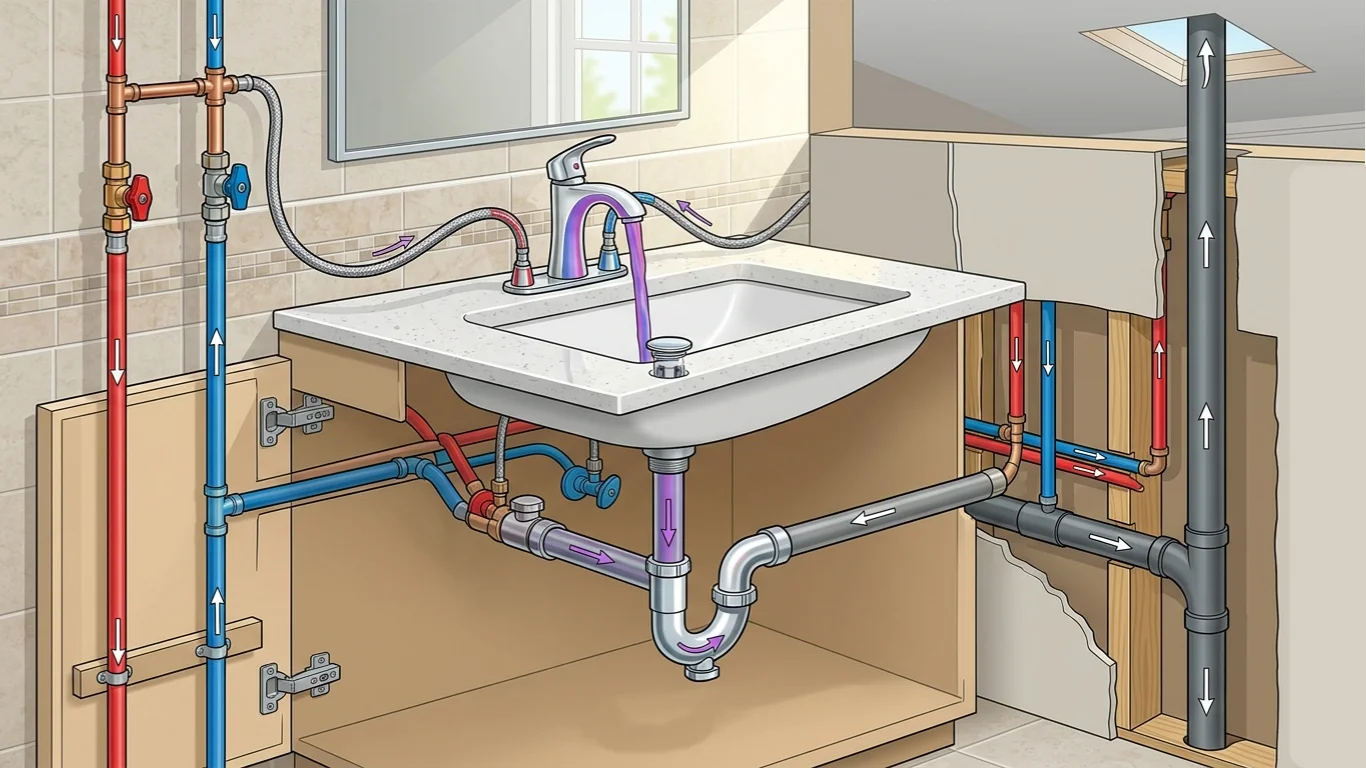
A bathroom sink plumbing diagram helps homeowners and professionals understand how the plumbing system beneath a sink works. Proper plumbing design ensures clean water supply and efficient drainage while preventing leaks and unpleasant odors. In 2026, many homeowners across the USA prefer learning basic plumbing concepts to handle small repairs or installations. A bathroom sink plumbing diagram illustrates how pipes, traps, valves, and connectors interact in a simple system. Understanding these components can make maintenance, troubleshooting, and installation much easier.
What Is a Bathroom Sink Plumbing Diagram
A bathroom sink plumbing diagram is a visual representation that explains how water flows to and from the sink. It typically shows both the water supply lines and the drainage system. The diagram includes important parts such as the faucet connections, shut-off valves, drain pipes, and the P-trap. These components work together to provide clean water while safely removing wastewater. By studying a bathroom sink plumbing diagram, homeowners can identify each part of the plumbing system. This knowledge helps when performing repairs or discussing issues with plumbers.
Main Components in a Bathroom Sink Plumbing System
Several key components appear in a bathroom sink plumbing diagram and each plays an important role. The faucet connects to hot and cold water supply lines that deliver water from the main plumbing system. Shut-off valves control water flow and allow maintenance without turning off the entire household supply. The sink drain allows wastewater to flow into the drainage system. Beneath the drain, a curved pipe called the P-trap holds a small amount of water. This trapped water prevents sewer gases from entering the bathroom.
Understanding the P-Trap Function
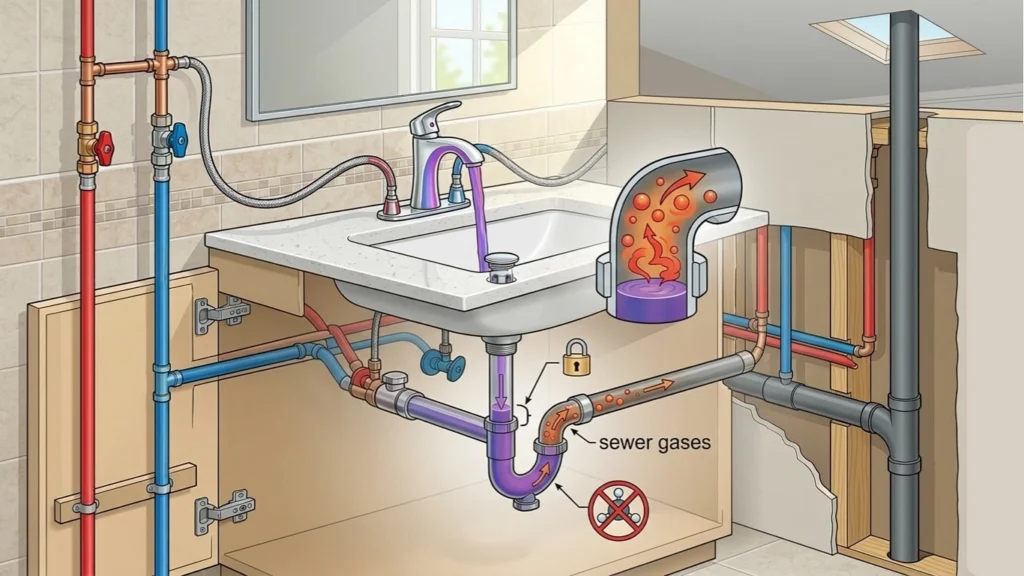
The P-trap is one of the most recognizable parts shown in a bathroom sink plumbing diagram. This curved pipe sits directly below the sink drain and plays an essential role in maintaining sanitary conditions. Water remains inside the trap after each use, creating a barrier against harmful sewer gases. Without this barrier, unpleasant odors could travel back into the bathroom. The P-trap also helps catch small objects that accidentally fall down the drain. Cleaning or removing it is usually simple when minor clogs occur.
Water Supply Lines and Shut-Off Valves
Water supply lines are another important feature in a bathroom sink plumbing diagram. These pipes bring hot and cold water from the home’s plumbing system to the faucet. Flexible hoses or rigid pipes connect the supply lines to the sink fixtures. Shut-off valves located beneath the sink allow homeowners to stop water flow during repairs. This prevents flooding and makes maintenance much easier. Proper installation of supply lines ensures consistent water pressure and safe operation.
Drainage Pipes and Wastewater Flow
The drainage system shown in a bathroom sink plumbing diagram is responsible for removing used water efficiently. Once water leaves the sink basin, it travels through the drain pipe and into the P-trap. From there, it moves through horizontal pipes toward the main drainage system of the house. Vent pipes connected to the plumbing system help regulate air pressure and maintain smooth water flow. Proper drainage design prevents backups and slow drains. Understanding how wastewater flows helps identify potential plumbing issues quickly.
Vent Pipes in Sink Plumbing Systems
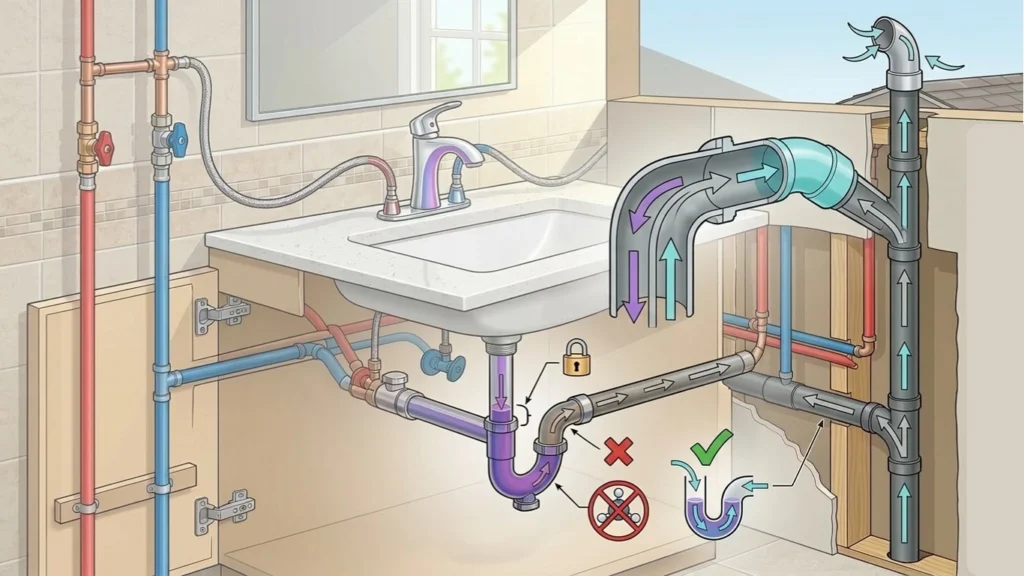
Vent pipes are often included in a complete bathroom sink plumbing diagram. These pipes connect the drainage system to the home’s main vent stack that extends through the roof. Ventilation allows air to enter the pipes, which prevents suction from slowing drainage. Without proper venting, water may drain slowly or produce gurgling sounds. Vent pipes also help maintain balanced pressure within the plumbing system. This ensures that water flows smoothly through the pipes.
Common Plumbing Issues in Bathroom Sinks
Studying a bathroom sink plumbing diagram can help homeowners recognize common plumbing problems. Leaks often occur around loose connections or worn-out washers. Clogged drains may result from hair, soap residue, or small objects trapped in the P-trap. Low water pressure can indicate issues with supply lines or valves. Unpleasant odors may signal problems with the trap or vent system. Understanding the plumbing diagram helps homeowners identify the source of these issues more easily.
Tips for Installing Bathroom Sink Plumbing
Proper installation is important for ensuring the system in a bathroom sink plumbing diagram functions correctly. Begin by securing the sink drain assembly and ensuring all seals are tight. Install the P-trap at the correct height to maintain an effective water barrier. Connect supply lines carefully to avoid leaks or pressure problems. Always check that shut-off valves operate smoothly before completing installation. Following the correct plumbing layout helps prevent future repairs and water damage.
Importance of Plumbing Maintenance
Regular maintenance keeps the system illustrated in a bathroom sink plumbing diagram functioning efficiently. Periodically inspect pipes and connectors for signs of leaks or corrosion. Clean the P-trap if slow drainage occurs. Ensure that supply valves open and close smoothly when needed. Preventative maintenance reduces the risk of costly repairs and water damage. A well-maintained plumbing system contributes to a safe and hygienic home environment.
Conclusion
A bathroom sink plumbing diagram provides valuable insight into how sink plumbing systems operate. By understanding the roles of supply lines, drain pipes, P-traps, and vent systems, homeowners can better maintain their plumbing. Learning these basics also helps identify problems early and communicate effectively with professional plumbers. Proper installation and regular maintenance ensure efficient water flow and prevent unpleasant odors or leaks. With a clear understanding of a bathroom sink plumbing diagram, managing household plumbing becomes simpler and more reliable.
FAQs
What does a bathroom sink plumbing diagram show?
It shows how water supply lines, drain pipes, traps, and valves connect beneath a sink to deliver water and remove wastewater.
Why is the P-trap important in sink plumbing?
The P-trap holds water that blocks sewer gases from entering the home and also helps trap small debris.
Can homeowners repair sink plumbing themselves?
Many small tasks like cleaning the P-trap or tightening connections can be done by homeowners with basic tools.
What causes slow drainage in a bathroom sink?
Slow drainage often occurs due to hair, soap buildup, or debris trapped in the P-trap or drain pipe.
How often should bathroom sink plumbing be inspected?
Checking plumbing connections and cleaning traps every few months helps prevent leaks and drainage problems.