Walk into most “unusable” backyards, and you’ll hear the same complaint. Not enough room. No space for a table, a fire pit, or the kids.
Look up instead of around, and the real culprit is usually hanging right above your head.
A tree that hasn’t been pruned with intent doesn’t just grow bigger. It spreads, it darkens, it closes in. It turns a perfectly good slab of ground into a damp, dim corner nobody wants to sit in. The yard didn’t shrink. The ceiling dropped.
That’s the part homeowners miss. Strategic pruning isn’t tidying. It’s spatial design. You’re not shrinking the tree to get it out of the way. You’re sculpting light and structure to hand the ground back to the people who own it.
Why That Dead Corner Is Really a Light Problem
The fastest way to kill an outdoor space is to let the canopy fill in. Dense foliage blocks the sun, and a spot that never gets light never gets used. You feel it before you can name it. The corner just reads as “off limits.”
Two cuts fix most of this. Crown thinning removes select inner branches so light filters through the whole canopy instead of hitting a wall of leaves. Canopy raising lifts the lowest limbs so light comes in sideways, under the tree, across the ground you actually want to stand on.
I’ve watched this land in a single afternoon. A homeowner was certain they needed to remove a big established tree to “get the yard back.” We thinned the crown and lifted the skirt instead. By that evening, the dead patch underneath had dappled light, a breeze, and a flat dry surface. They kept the tree and gained the room. The tree was never the problem. The unmanaged canopy was.
Pruning Builds Rooms You Didn’t Know You Had
Designers talk about outdoor rooms. You don’t need to build a single wall to get them.
A well-pruned tree creates sightlines. Raise a canopy, and you open a view through the yard, which makes the space feel larger and gives the eye somewhere to travel. Leave a low-hanging mess, and the yard feels like one cramped box.
Pruning also frames. A lifted canopy becomes a natural roof over a seating area. A thinned crown lets you tuck a bench beneath it without sitting in the dark. The branches do the architecture for you, for the price of a few good cuts instead of a pergola.
Shade in January, Sun in July: Editing the Canopy by Season
Here’s where pruning earns its keep all year, not just at the working bee.
In peak summer, you want shade, and the right canopy delivers serious cooling. The US EPA notes that shaded surfaces may be 20 to 45°F, roughly 11 to 25°C, cooler than the peak temperatures of unshaded materials. That’s the difference between a paved area you can walk on barefoot and one you can’t. Strategic thinning keeps enough canopy to throw that shade while still letting air and filtered light move through, so the space stays cool without going cave-dark.
Come the cooler months, you want the opposite. A canopy thinned correctly lets low winter sun reach the ground and dry it out, instead of trapping everything in permanent gloom. You’re not choosing between a shady yard and a sunny one. You’re editing the canopy so it gives you the right thing in each season.
The Ground Game: Why Nothing Grows Under a Crowded Tree
Stand under a tree that’s never been thinned and notice what’s missing. No grass. Patchy moss. Damp that lingers for days after rain.
That’s not bad luck. A dense canopy blocks the light grass needs and traps still, humid air against the ground. Nothing dries. Mosquitoes love it. The lawn gives up.
I get called to these patches constantly. One was a slick green strip of moss the owner had written off as “just shady.” We thinned the crown to open the canopy. Within a few weeks, the airflow and filtered light had dried it out, and the turf started holding again. The variety matters too once the light returns, and choosing a grass suited to your local conditions decides whether the lawn under your tree thrives or just scrapes by. Same soil, same tree, completely different ground
There’s a drainage angle too. The EPA notes that urban trees can reduce stormwater runoff by absorbing 15 to 27% of annual rainfall. A healthy, well-structured tree is working for your yard’s water balance. A neglected one just shades the ground into a swamp.
The Cut That Costs You Everything
Now, the part that separates a transformed yard from a wrecked one.
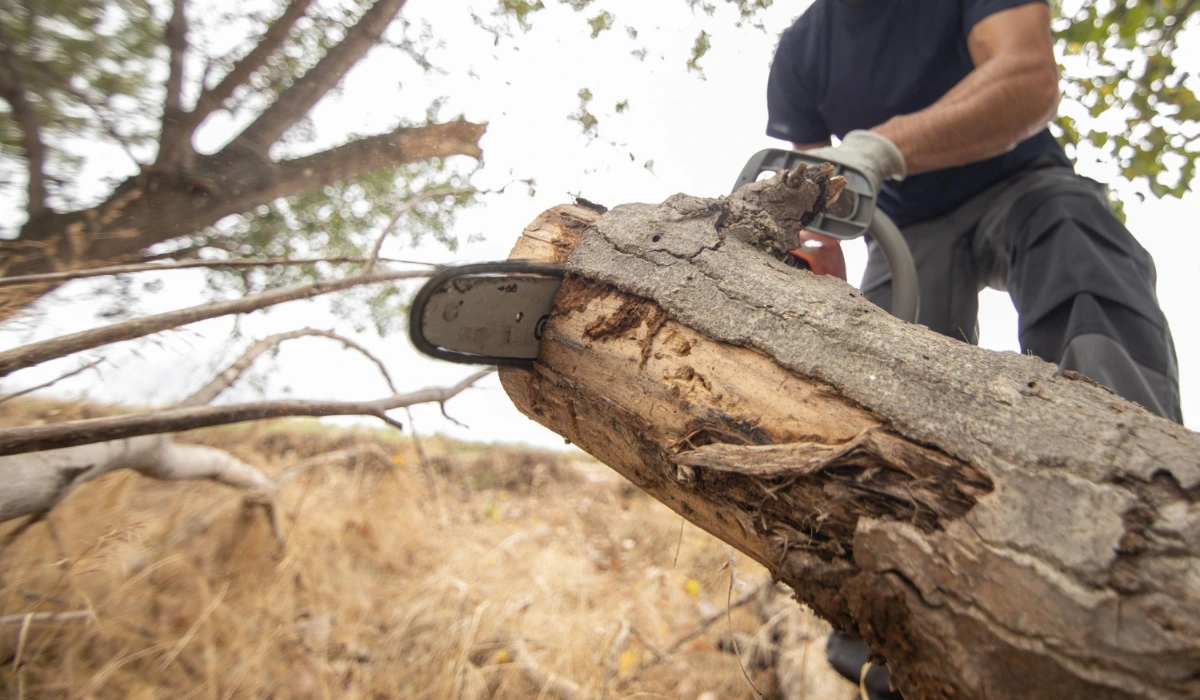
Most damage I see isn’t from neglect. It’s from enthusiasm. Someone grabs a saw, “tops” the tree by lopping the main limbs back to stubs, and feels productive. It’s the worst thing you can do.
Topping forces a tree to throw out weak, fast water shoots that are denser, uglier, and more dangerous than what you removed. You get less light, a structurally compromised tree, and a bigger bill later. Compare the two approaches honestly:
| Approach | What you get | Over time |
| Strategic thinning/canopy raising | More light, clean structure, usable ground | The tree stays healthy, space keeps improving |
| Topping / hard lopping | Brief “tidy” look, then dense weak regrowth | Weaker tree, more shade, safety risk, higher cost |
This is the line where it stops being a weekend job. Knowing which limbs carry the structure, which cuts the tree can recover from, and when to make them is genuinely specialist work, which is why a structural assessment from a qualified team like Lakeside Trees and Stumps pays for itself. One wrong cut on a mature tree isn’t a do-over. It’s a decade.
Think of pruning like editing a paragraph. Cut the right words and the meaning gets sharper. Hack out whole sentences at random, and you’re left with something weaker than what you started with.
The Real Renovation Is Overhead
Before you price up decking, retaining walls, or a bigger block, look up.
The most usable yard isn’t the biggest one. It’s the one where the light, the sightlines, and the dry ground have been handed back to the people standing in it. Most of the time, that renovation is already growing above your head, waiting for someone to make the right cuts.